

When you imagine your ideal birth, do you see yourself in water? Water can offer warmth, buoyancy and support, as well as a gentle transition for your baby from the waters of your womb to the outside world.
If this is something you might be interested in, you’ll need to do your homework. Not every birth setting offers these options, and there are trade-offs you’ll want to understand.
So before you decide where you’re going to give birth, here’s everything you need to know about Chicago-area options for laboring in water (“water immersion” or “immersion hydrotherapy”) and birthing your baby in water (“waterbirth”).
We cover:
- The difference between hydrotherapy and waterbirth
- Why you might seek out a birth place that allows you to labor in water
- Why you might seek out a birth place that allows waterbirth
- The safety of waterbirth
- A few more things to know about laboring and delivering in water
- Where you can have a waterbirth in the Chicago area
- Where you can labor in water (but not give birth) in the Chicago area
You can also listen to three families tell their waterbirth stories: Jaena & Doug (West Suburban ABC); Erika and Nick (AMITA Health Adventist Medical Center Hinsdale); and Rebecca & Sy (home birth).
What’s the difference between hydrotherapy and waterbirth?
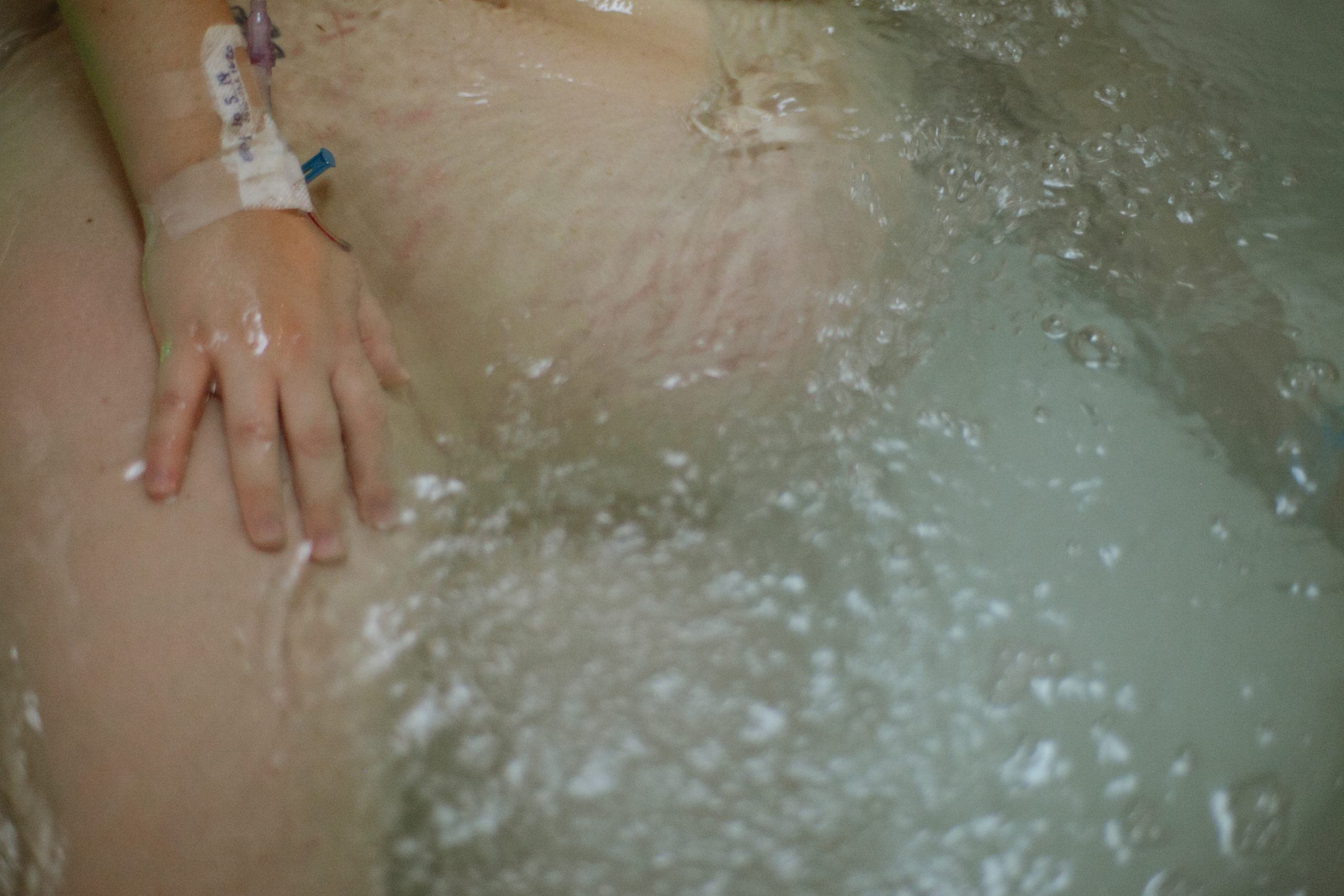 Hydrotherapy means being in water during the first stage of labor, but not necessarily while you’re pushing or for the birth of your baby. Hydrotherapy can mean laboring in a tub, but it can also mean laboring in the shower. To make the distinction, some people refer to laboring in a tub as “water immersion” or “immersion hydrotherapy”.
Waterbirth means actually giving birth to your baby underwater — usually in a large tub designed for this purpose. After you deliver your baby’s head and shoulders, your baby will slip out into the water. You or your provider can then lift your newborn out of the water and into your arms or onto your chest, where they will take their first breath.
Anywhere you can give birth to your baby in a tub, you can also labor in a tub. The opposite is not true, though: many hospitals offer the option of water immersion during the first stage of labor, but require you to get out of the water as you begin to push.
The benefits and risks of hydrotherapy and waterbirth overlap, but there are also some differences. To keep it clear, we’ve broken the discussion down into two sections:
- What you should know about laboring in water (“water immersion” or “immersion hydrotherapy”)
- What you should know about giving birth in water (“waterbirth)
Why you might look for a birth place that offers labor tubs
Many women seek out a hospital or birth center where they can labor in water. Some choose to birth at home so they can use a labor tub. Here are some reasons you might follow their example.
You are drawn instinctively to the idea of water – it just sounds like it would feel good
 Many women are attracted to the idea of laboring in water, and for good reason.
Being in water, especially in a large tub, is physically and emotionally soothing. Because you’re partly floating, you can move from one position to another easily. The warmth is relaxing. Your weight is supported. Being in a tub can help you stay calm and cope with contractions, and can be a great way to get some rest in a long or difficult labor. Those of us who love to take baths when we’re stressed or upset may be especially drawn to the idea of laboring in water.
Certified Nurse Midwife Annette Payot is the Directory of Midwifery at The Birth Center at PCC. She is a strong advocate for water immersion in labor. She describes it this way: “It’s just so powerful. Everyone is gathered around the birthing woman in a ring of support around the tub. You can imagine, it’s three o’clock in the morning and the lights are low. She’s in the tub and it’s quiet and serene. She’s in the zone and her partner is there and her family’s there and it’s just peaceful.”
If you like the sound of that, you may want to seek out a birth place that has labor tubs.
You’re planning a natural childbirth and want to avoid the use of pain medication.
If you’re planning a natural childbirth, having the option to labor in water can be a big help in avoiding pain medication. “Some women find that warm water is really relaxing,” says Certified Nurse Midwife Sarah Stetina, who is the Director of Midwifery at Burr Ridge Birth Center. “That helps labor be more effective and less painful. For clients whose goal is unmedicated childbirth, using this tool during labor can be very, very helpful.”
Major maternity organizations support water immersion during the first stage of labor as a means of managing pain without medication.
The American College of Obstetricians and Gynecologists (ACOG) is the leading professional organization of obstetricians. ACOG has published two position papers endorsing immersion hydrotherapy as a tool for coping with labor pain. In “Approaches to Limit Intervention During Labor and Birth”, ACOG notes that “during the first stage of labor, water immersion has been found to lower pain scores without evidence of harm.” And in “Immersion in Water During Labor and Delivery”, ACOG states, “Immersion in water during the first stage of labor may be associated with shorter labor and decreased use of spinal and epidural analgesia and may be offered to healthy women with uncomplicated pregnancies between 37 0/7 weeks and 41 6/7 weeks of gestation.”
The water birth position statement of the American College of Nurse Midwives (ACNM) likewise recognizes that water immersion, including laboring in water, “may be particularly useful for women who prefer physiological childbirth and wish to avoid use of pharmacological pain relief methods.”
So if you’re aiming for a natural childbirth, choosing a birth place that has tubs for use during labor can be a big step towards achieving your goal of giving birth without pain medication.
“I got to climb in the tub and labor in there, breathe through contractions and move into different positions. The water really helped with the pain. It was relaxing. . . . It was way easier than my first birth.”
You’re planning an epidural but like the idea of being in the water in the early stages of labor
Even if you’re planning an epidural, you may still value having the option to be in water for the early stages of labor.
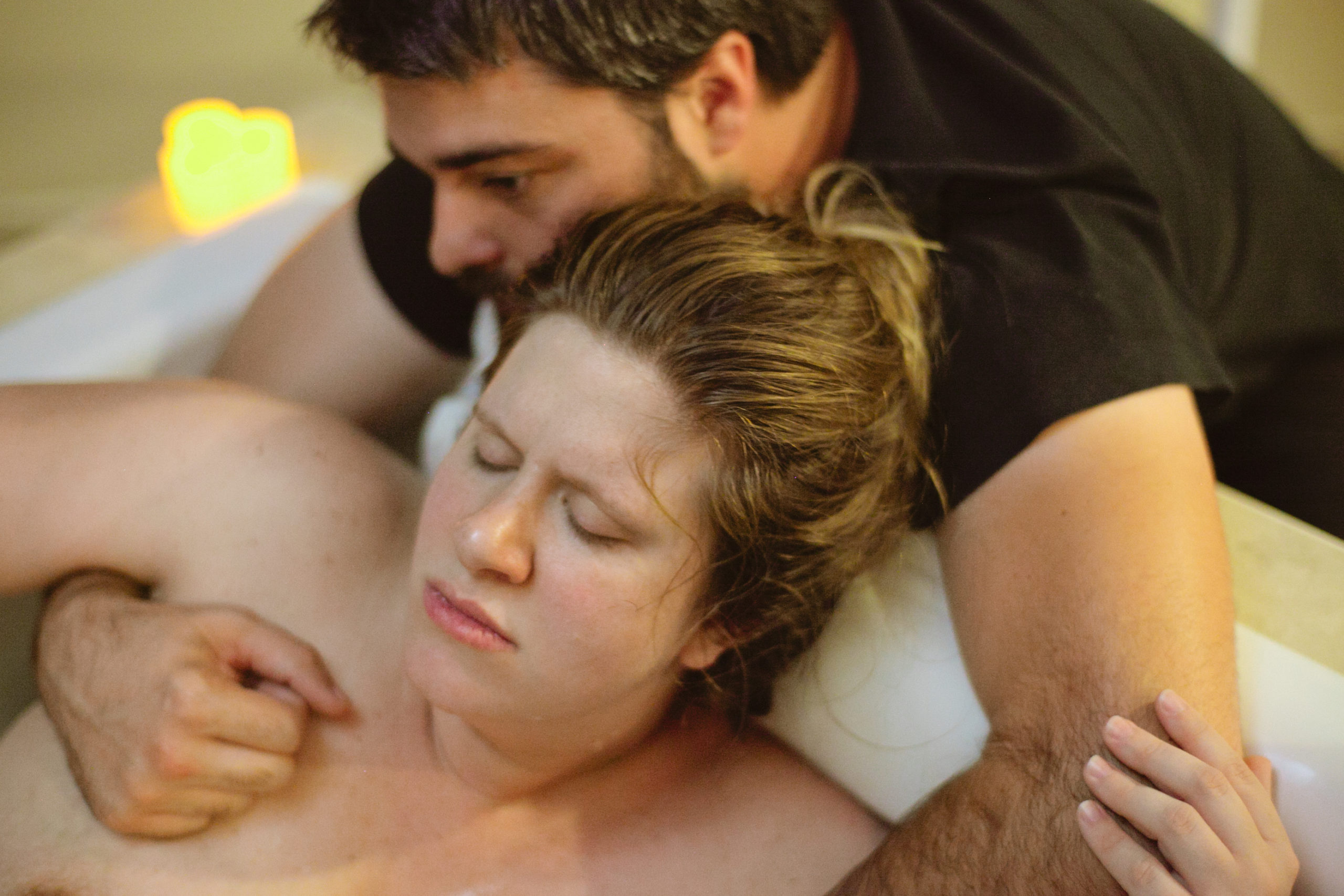 Mary Saracco is a CNM at Elmhurst Hospital, and has been using hydrotherapy as one of the tools in her toolkit for almost 20 years. She notes that women who are planning an epidural often overlook the benefits of having a labor tub available. “Remember that you won’t get an epidural until you’re in active labor. So being in water in early labor can be a great choice for relieving pain and anxiety during that time.”
Many first-time mothers, in particular, may not be aware that there can be a significant delay between the time you request an epidural and when your epidural is actually administered. Being in the water can help you manage your contractions while you’re waiting.
Just keep in mind that once you’re ready for your epidural (and your epidural is ready for you!), you’ll need to get out of the tub.
You want to minimize the likelihood of certain interventions
Most women want to avoid interventions such as c-section, instrumental delivery (forceps or vacuum assisted) and episiotomy, if possible.
There is some evidence that waterbirth can reduce the likelihood that you’ll need these inventions and that these benefits are partly attributable to laboring in water. See Evidence Based Birth, Evidence on Waterbirth (“Normal Vaginal Birth”, “Episiotomy”)
“I’d highly recommend the pool to anyone thinking about it. The best way I can describe it is you’re floating, there’s no pressure from anything touching you’re [sic] body, the water keeps you cool, it helps with what’s going on down there also! For me it was the best decision.”
Why you might choose a birth place that offers waterbirth
Think of waterbirth as an add-on to immersion hydrotherapy during labor. Any birth place that lets you give birth in water will also let you labor in water. So if you seek out a hospital or birth center that allows waterbirth (or if you rent a birthing tub for a home birth), you get all of the benefits of laboring in water, and you get some additional benefits as well. But there are also some additional risks you’ll want to consider.
You won’t have to get out of the tub when your baby is coming
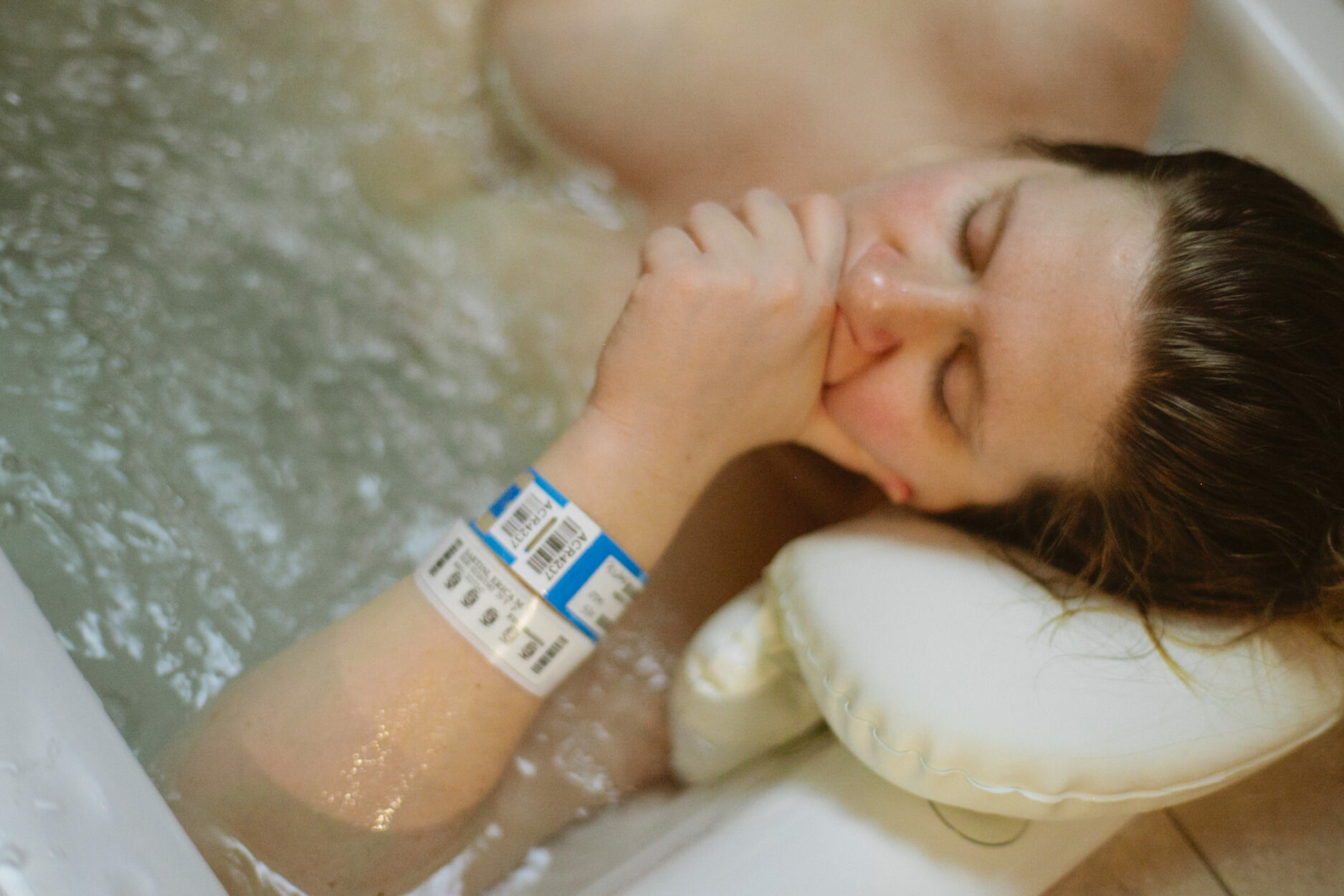
In a setting that only allows you to labor in the tub, you’ll have to get out as soon as you start to push. Some women find that really hard.
As Burr Ridge midwife Sarah Stetina puts it, “We know that getting in a body of warm water will slightly lower your blood pressure. It will relax your muscles. It promotes a sense of relaxation in general and can help with pain management and some of the tension we have in labor that can impact our progress. So it’s not surprising that often once clients get in the water, they really want to stay in!”
Gayle Riedmann is the founder of West Suburban Midwives, and initiated the creation of the Alternative Birthing Center at West Suburban Hospital in 1999. She explains how she came around to the idea of waterbirth for this very reason:
I will tell you when waterbirth first started gaining in popularity, it looked to me like just another fad. I was very skeptical. I thought, ‘Babies are generally born on land. So why are women suddenly wanting to deliver their babies underwater?’ This did not make sense to me.
But then I saw my first water birth, attended by another midwife, and I thought it was pretty magical. The woman was getting extraordinary pain relief from being in the water. And I had to ask myself the question, “If this is such a great tool for pain management, why would you get her out of the water to have her baby if it’s safe to let her stay in?”
So then I went to a waterbirth conference and learned about the risks and benefits and decided this is something I wanted to offer. And that’s when the waterbirth program started at West Suburban — 20 years ago!
As a mother looking at your options for childbirth, this is the important point to keep in mind. If you choose a birth setting that offers waterbirth, you can get in the tub at any point in labor and stay as long as the water is helping you. If you turn out to be one of those women who finds that being in the water as you push just feels right, you’ll be very glad to be able to stay right where you are. In fact, women who have waterbirths tend to be very satisfied with their births. In one study, 72% of women who gave birth in water said they would choose waterbirth again (Torkamani et al. 2010). For comparison, the American Society of Anesthesiologists reports that about 60% of women who had an epidural report that they would choose an epidural again.
PCC midwife Annette Payot is a fan of waterbirth not just as a clinician but as a mother as well. “I’ve had two water births. It’s just so relaxing and lovely. With my second baby, it took a while to get the tub full. I was in a panic to get in the tub. I felt like I couldn’t do it without the water!”
She is not alone. In fact, three of the four midwives we interviewed for this article themselves chose to have waterbirths.
“I labored in a pool with my first. It made a huge difference when I arrived at the hospital I said to the midwife if the pain got much worse I wanted an epidural, she persuaded me to try the pool first and I got through labor with no medication.”
 You want to minimize the likelihood of certain interventions and complications
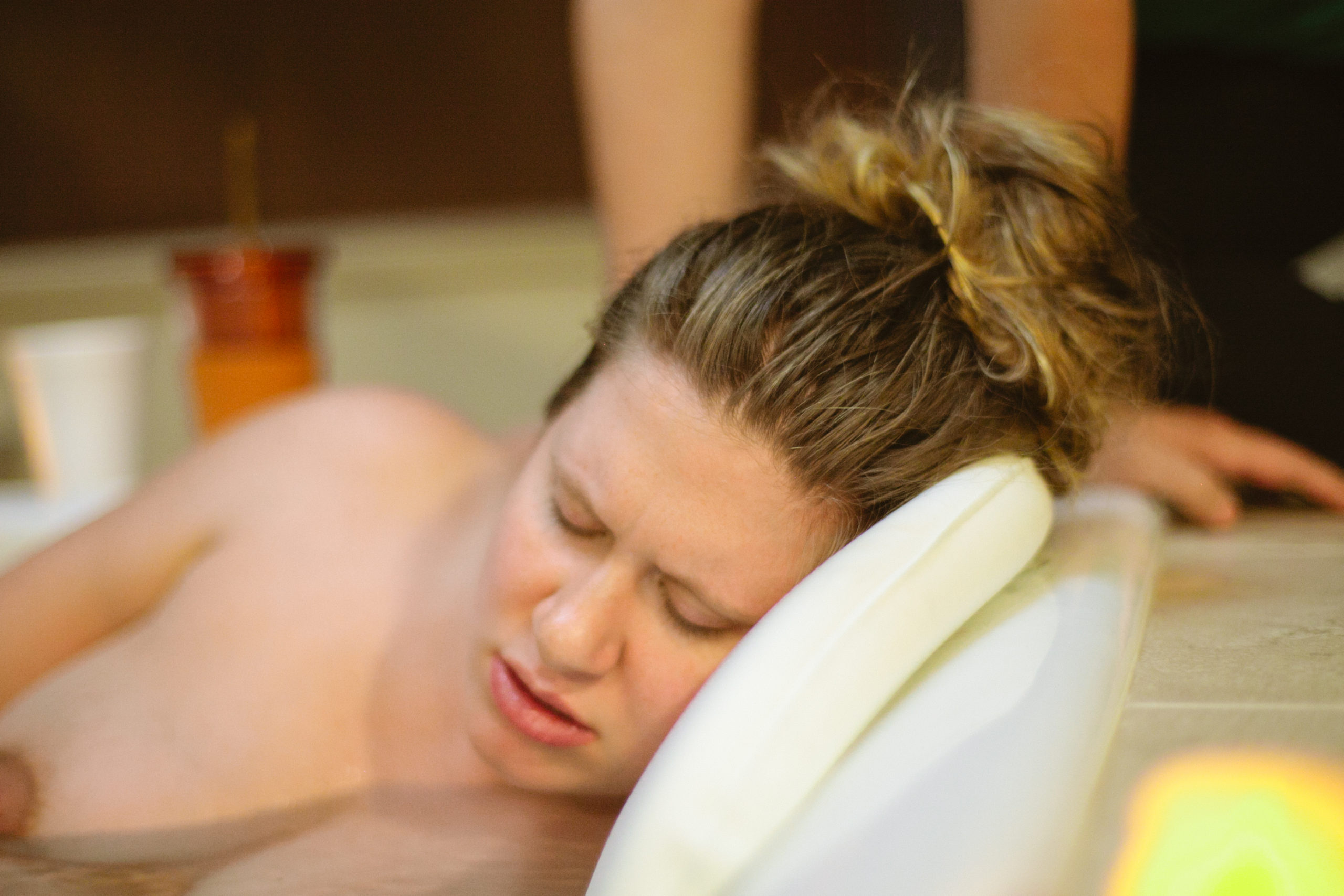
Like water immersion in labor, waterbirth is associated with lower rates of interventions and complications in birth.
The organization Evidence Based Birth (EBB) — a leader in promoting evidence-based maternity care — publishes a free in-depth review of the medical evidence bearing on the benefits and risks of waterbirth. While noting that it can be difficult to separate out the effects of laboring in water from the effects of giving birth in water, the EBB review summarizes the potential benefits of waterbirth for the mother as follows:
-
- Less pain and higher satisfaction with the birth experience
- Less medication use for pain relief—this may be important for people who want or need to avoid epidurals or narcotic medications during labor
- Less use of artificial oxytocin and possibly shorter labors
- Higher rates of normal vaginal birth [no instrumental delivery or c-section]
- Possibly lower rates of postpartum hemorrhage
- Lower rates of episiotomy
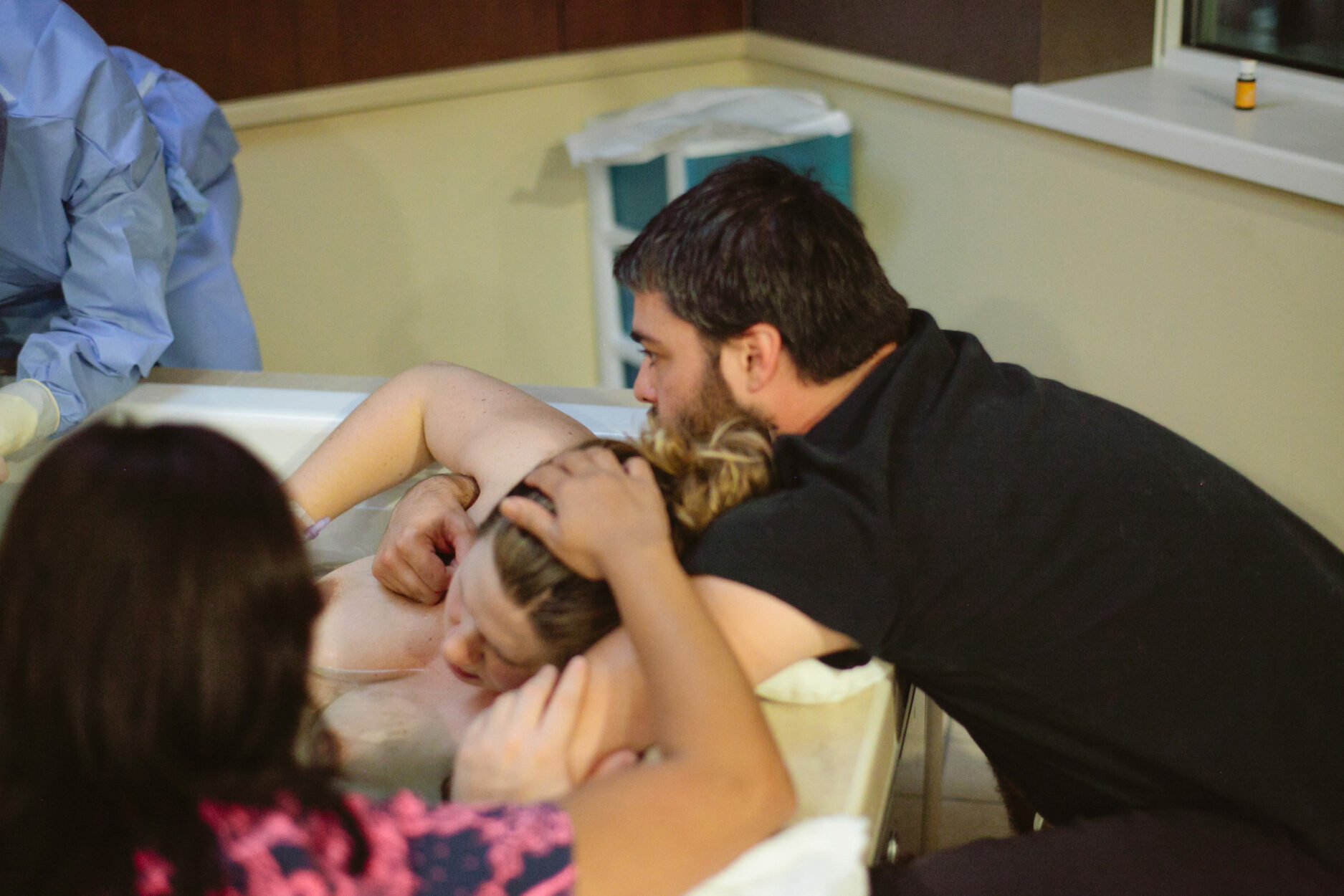 So if you want to maximize your chances of having an uncomplicated vaginal birth, with minimum use of medications and interventions, it can be a smart move to choose a birth place that allows waterbirth.
You like the idea of your baby transitioning first from womb to water
You may share the intuition some people have that being born into warm water may benefit your baby, easing the transition from watery womb to airy world. That could be an additional reason you might want to have the option of a waterbirth.
You want the first moments with your baby to be very calm and “hands off”
A seldom discussed benefit of waterbirth is that those first moments after a baby is born in water tend to be very calm and quiet, with less of the postpartum bustle that can characterize “land birth”.
As Gayle Riedmann explains it, waterbirth is a very hands-off approach.
When a woman is immersed in water, the depth of the water provides a counter pressure, just like when you dive deeper into water, you start to feel pressure on your ears. And that pressure of the water supports the perineum against the pressure of the baby’s crowning head. So the midwife doesn’t have to put her hands in the water to support the perineum, it just happens naturally. The head will emerge, and then the mother will pause, and then she’ll be ready to push out the shoulders. You get to watch the complete restitution of the baby, the turning of the baby, and as it comes out in the water, because you’re not reaching in and doing a lot of manipulation. You’re letting it all happen on its own.
 Sarah Stetina sees a connection between that “hands off” approach and a peacefulness in the birth room in the first moments after birth.
Waterbirth can be really empowering because it’s so easy for clients to catch their own babies. And because we can be hands off, the moments immediately post delivery tend to be more peaceful, more mellow. No one’s rushing over to rub the baby, no one’s grabbing at wires and cables and cutting things off to make room. And it takes a little bit longer for the baby to cry. Overall babies born in water do just as well as other babies, but it’s a slightly slower transition. It reminds everyone to be patient, there’s no rush to use the bulb suction, no rush to get the baby crying. So it’s all just a little bit more peaceful.
If that picture appeals to you, consider finding a birth place that offers waterbirth.
You just like to keep your options open
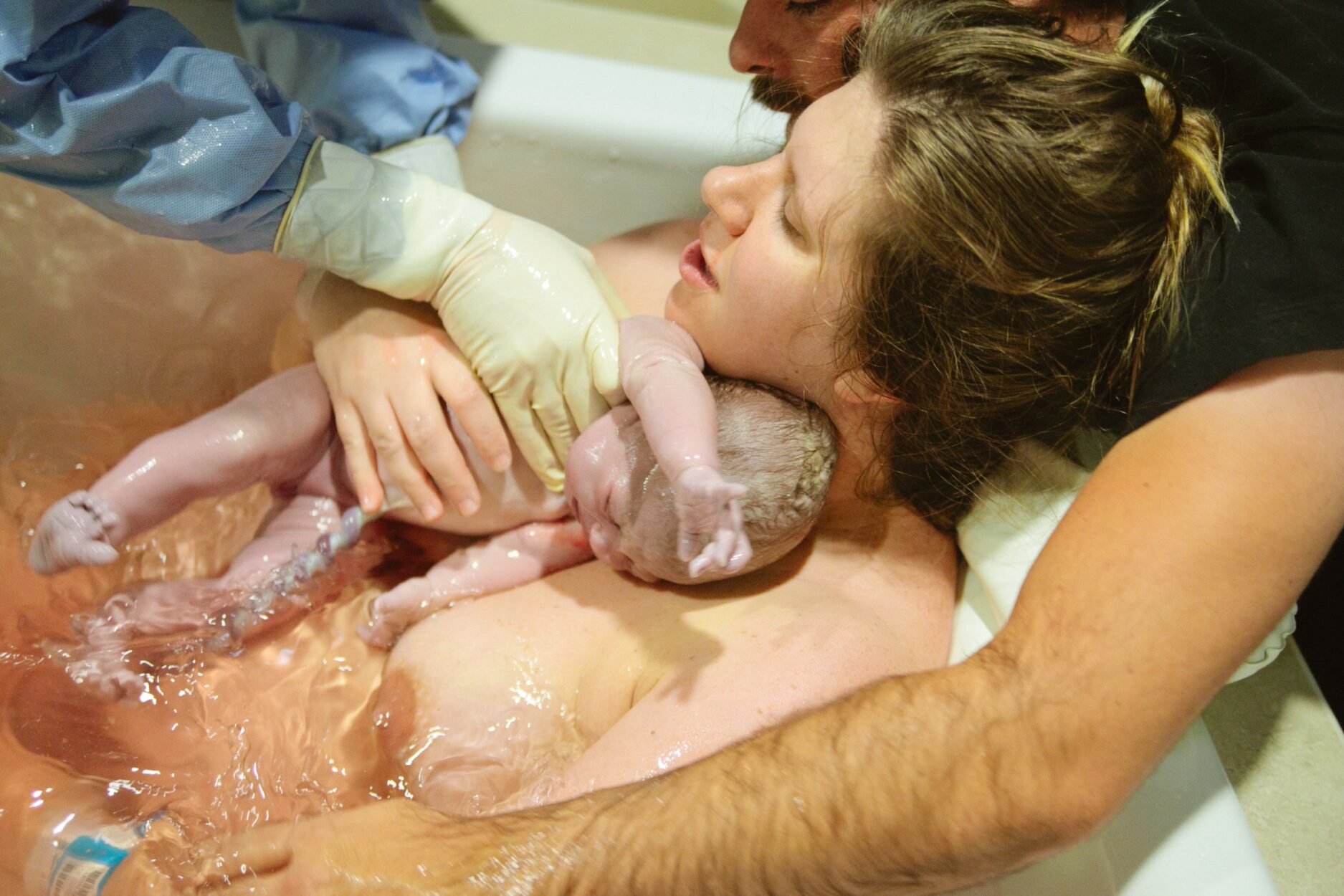 Even if you’re not particularly attracted to the idea of a waterbirth right now, you might choose to keep your options open.
Gayle Riedmann tells the story of a client who was actively hostile to the idea of water birth at all her prenatals. “She kept saying, ‘That’s gross, who wants to be in the pool with all that mess?’” That changed, though, when she arrived at the hospital in very active labor.
As Gayle tells it,
“We bypassed triage. She was in a wheelchair. We went straight into the ABC room. I had gotten there before her as I always do: I get the bed ready, I put things in place. And I hadn’t been thinking about the fact that she was not interested in a waterbirth, so I had started the tub filling. And when we got to the room, she stood up out of that wheelchair, stripped off her clothes, got in the water and delivered her baby. And then, when she had the baby in her arms, she said, ‘ Oh my God, I told you every visit, I didn’t want a water birth. I can’t believe I came in here and saw that water and all I wanted to do was get right in!”
Is waterbirth safe?
Waterbirth is likely safe for both mothers and infants, although some research remains to be done
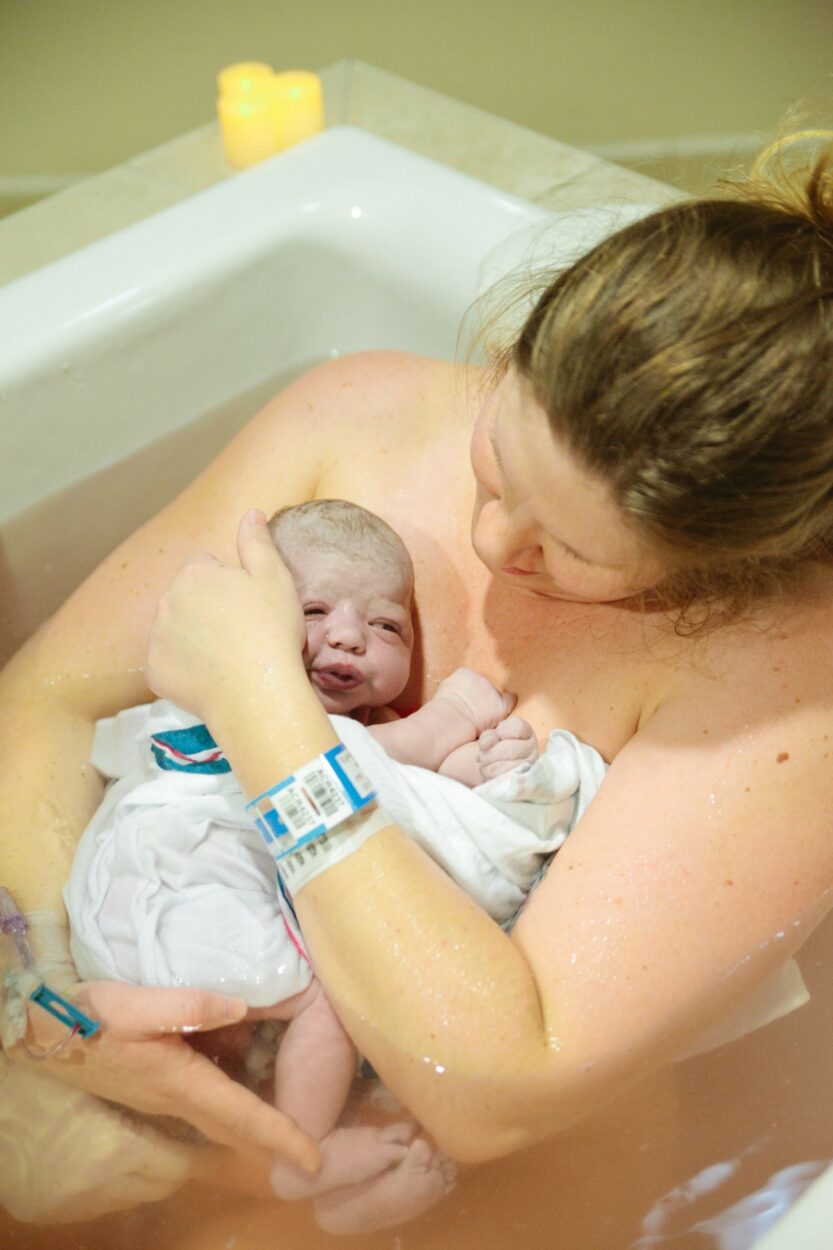 ACOG, the leading organization of OBs, is neutral on the question of whether waterbirth is safe, taking the position that “there are insufficient data on which to draw conclusions regarding the relative benefits and risks of immersion in water during the second stage of labor and delivery.” ACOG notes that there have been case reports of serious neonatal complications but acknowledges that “the actual incidence has not been determined in population-based analyses.” Because the evidence is inconclusive, ACOG recommends that “birth occur on land, not in water.” But ACOG also supports continued study of waterbirth safety, and acknowledges that “a woman who requests to give birth while submerged in water should be informed that the maternal and perinatal benefits and risks of this choice have not been studied sufficiently to either support or discourage her request.”
ACNM’s position is similar, although stated more affirmatively:
- Results from observational research on warm water immersion hydrotherapy during birth are less conclusive. Researchers indicate that women who experience uncomplicated pregnancies and labors with limited risk factors and evidence-based management have comparable maternal and neonatal outcomes whether or not they give birth in water.
- Women should be given the opportunity to remain immersed during labor and birth if they wish to do so within the context of a shared decision-making process with their health care providers. This process includes ongoing maternal and fetal assessment as labor progresses.
- To make an informed choice for the use of hydrotherapy, women should have access to information regarding the state of the science, including strengths and limitations, and documented benefits and risks of available pain relief options including water immersion and or water birth as demonstrated in the published literature.
To help you make your own determination, here’s a quick overview of some of the medical evidence on safety outcomes for mothers. You can
- No difference has been found in rates of maternal infection between land birth and water birth (Nutter et al. 2014)
- Some studies suggest that waterbirth is correlated with lower volumes of postpartum blood loss and fewer postpartum hemorrhages, while others show no difference (Dahlen et al. 2013) (Gayiti et al. 2015) (Nutter et al. 2014)
And here’s an overview of the medical evidence on outcomes for infants:
- Waterbirth has not been linked with a difference in the rates of newborn death, however this outcome is so rare that it is hard to construct a study large enough to capture any difference [See Evidence Based Birth, Evidence on Waterbirth (“Newborn Death”)]
- Apgar scores for infants born in water are not any different than for those born on land (Vanderlaan et al. 2017b) (Taylor et al. 2016)
- Fewer babies born in water are admitted to the NICU, though this is most likely due to the fact that when problems arise in an intended waterbirth the mother usually leaves the pool before delivery (Vanderlaan et al. 2017b).
- No difference has been found in rates of shoulder dystocia (Vanderlaan et al. 2017b).
- Some studies show lower rates of newborn infection for waterbirth, most show no difference (Geissbuehler et al., 2004) (Taylor et al. (2016) (Vanderlaan et al. 2017b).
- Rates of newborn resuscitation are the same or better for waterbirth and rates of newborn hypothermia are the same or better for waterbirth (Vanderlaan et al. 2017b).
While the evidence is still accumulating, the evidence we have does not suggest that waterbirth is dangerous for either mother or baby.
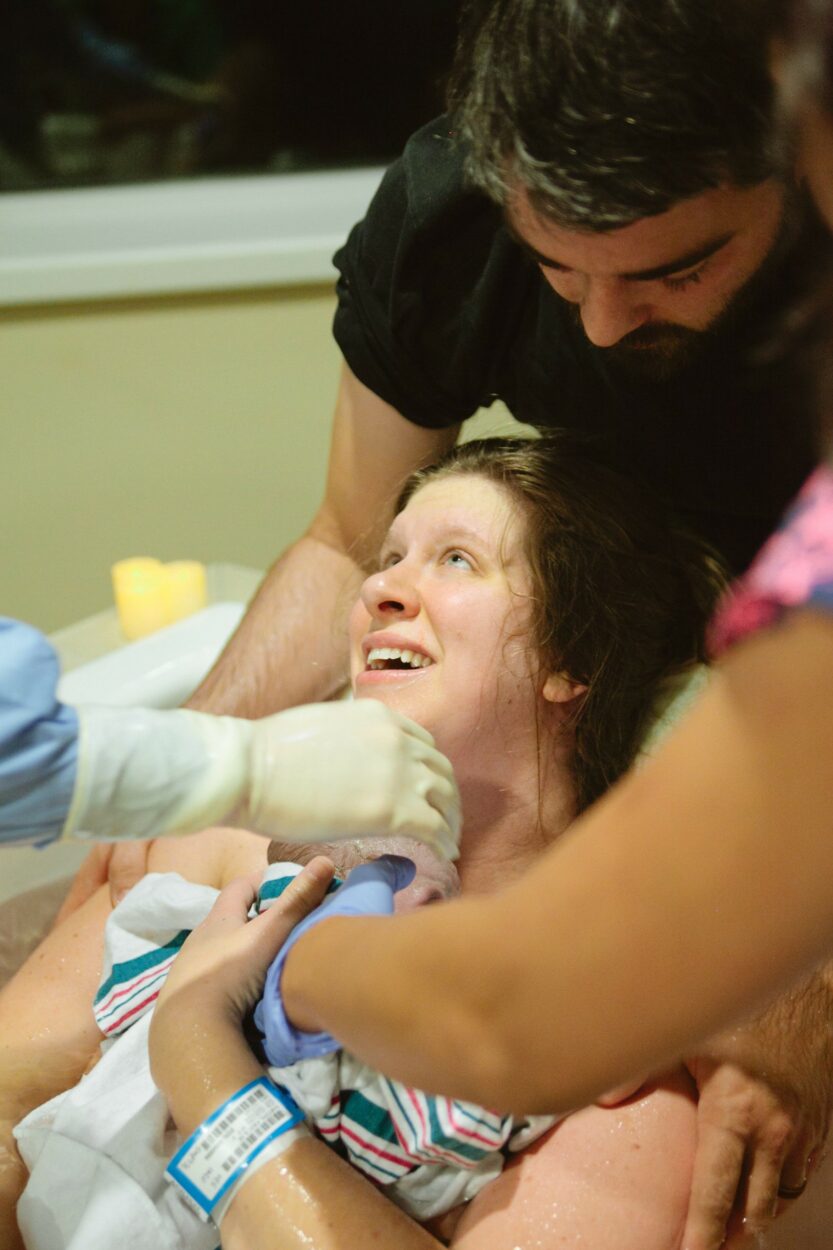
When waterbirth can be riskier