Transcript
Anne Nicholson Weber: 00:00 This is episode 19. Welcome and thank you for being here. Today I’m talking about home birth with three of Chicago’s most experienced home birth midwives. They really know what they’re talking about, and I hope you’ll listen in.
Welcome to the Birth Guide Chicago podcast, conversations about building your circle of support in the childbearing year. We connect you with experts in our community who can help you conceive, stay healthy during pregnancy, have a safe and satisfying birth, and embrace the joys and challenges of becoming a new family. I’m your host, Anne Nicholson Weber, and the founder of birthguidechicago.com, where every month, thousands of Chicago area families find relationship-centered care, from conception through the postpartum period.
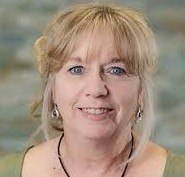
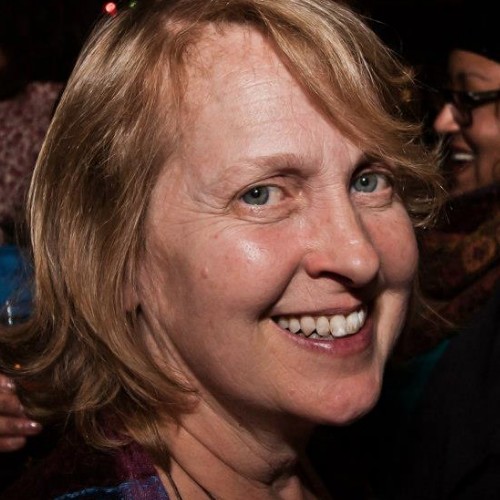
Anne Nicholson Weber: 00:52 Today we’re talking about home birth, and my guests are three very experienced home birth midwives. Becky Coolidge is a certified professional midwife. After having been licensed in three other states, she was recently awarded one of the first CPM licenses in Illinois. She’s attended over 600 home births over the span of her career. Hillary Kieser is an advanced practice registered nurse and a certified nurse midwife. She founded her practice, Gentle Birth Care, 16 years ago, and her practice now includes four additional midwives. Hillary herself has attended over 1500 home births over the course of her career. And finally, Sarah Simmons is also a certified nurse midwife. Her practice is called New Life Midwifery Services. Sarah has attended 1300 home births over the past 35 years. So represented here are nearly 3,500 home births.
Anne Nicholson Weber: 01:46 Let me start out with this question. What are some good reasons to choose a home birth? And are there any less good reasons that you’d want to call out? And Becky, let me start with you.
Becky Coolidge: 01:56 Good reasons to choose home birth: because you’re not feeling like the hospital version of birth is doing it for you. There’s a whole different way of birth that’s going on in hospitals, uh, that’s moved more and more away from women-centered and autonomous decision making and physiologic birth process respect. And, um, there’s a fair number of people who that just doesn’t appeal to them and they want some autonomy over their birth process and decisions and are looking to avoid a surgical birth unless it’s absolutely necessary. And so out-of-hospital birth is where they’re going to find that.
Anne Nicholson Weber: 02:37 Yeah. And I’m interested that you went immediately to autonomy because I, for myself, from my own point of view, that does seem like one of the really salient points about home birth. When you have a home birth, you’re the host, and when you’re anywhere else –even a birth center, which also tends to be very supportive of physiologic birth — you’re still on somebody else’s turf. So who is a good candidate for home birth? Hillary, do you want to take that one?
Hillary Kieser: 03:01 Well, in our practice, it’s low risk moms and low risk babies. Though we’re looking for people who aren’t necessarily like on other medication for risk factors, you know, like the hypertensive or diabetics with on insulin. We do do diet controlled diabetes patients. So if you have a big risk factor, then you’re really not a good candidate for home birth. And we do require a 20 week ultrasound to verify that our babies are also low risk. We just found through the years that that has really helped us <laugh> avoid problem births at home.
Anne Nicholson Weber: 03:38 Yeah. Sarah, do you have anything to add to either of those questions?
Sarah Simmons: 03:43So people that are good candidates for home birth are low risk, as Hillary said, although part of that is in the eye of the provider. Like over the years, my definition of high risk has evolved. So for example, when I was a baby midwife, I didn’t want anyone on psychotropic medications. And now there’s so many people on psychotropic medications. However, that being said, I did have newborn withdrawal from in one case, and the baby was fine, but it had to go to the hospital for respiratory distress at 12 hours postpartum. So you have to – risk screening is ongoing from the first prenatal. I tell parents all the time, having a baby, it’s like crossing the street. You could get run over, but there are risks no matter where you have a baby. And you have to figure out what set of risks are you most comfortable with.
Sarah Simmons: 04:41 What would be the most troubling to you if something went as not as planned? And I’ll say for myself, I mean, people talk about safety all the time, but you’re choosing between very intense supervision with a one to one ratio of provider to patient, or sometimes two to one. Well, I guess you gotta count the baby. So two to two <laugh>. But, um, in the hospital, there’s a certain amount of institutional chaos where they’re understaffed or they have different kinds of duties that take them away from the patient. So big stuff can get missed in the hospital.
Anne Nicholson Weber: 05:20 That’s really interesting. And I think that’s something that particularly first time parents are often taken aback by, that their doctor isn’t with them every minute of <laugh> of the labor or anything like it. And the nurses are in and out, so they’re more alone than they might’ve expected. So that, that takes us to a question I was going to ask, and in some ways, uh, well, . . . I was going to ask about how you answer when people say, is home birth safe? I think though, that we should start maybe on some of the benefits. And, Becky went straight to autonomy is kind of the big reason why a family might choose a home birth and the really skilled support for physiologic birth. Is there anything you want to add, uh, either Hillary or Sarah to kind of the list of why home birth is wonderful and why you want to do it?
Hillary Kieser: 06:08 Uh, I had several of my babies also at home. As long as everything babies are no, you know, low risk and moms are low risk, basically the baby is coming out the vagina, <laugh>, and we’re there just to make sure everything’s going fine. But being in your own home environment is such a blessing. It’s, it creates family, it creates home. Personally, I think we should all be able to birth and die at home. <laugh>.
Anne Nicholson Weber: 06:42 Yeah.
Hillary Kieser: 06:43 Family can be around. In a hospital, you don’t get that. Kids come running in afterwards. So moms don’t disappear to come home with a baby two days later, which must be hard to explain really to a child <laugh>. It’s just a beautiful way to create family.
Anne Nicholson Weber: 07:04 Yeah, yeah.
Sarah Simmons: 07:05 Also, for first time parents, it’s important for them to recognize that birth is primarily a physiologic healthy experience and only rarely needs to be medicalized. And that ratio gets reversed in the hospital. They assume that it’s a disaster waiting to happen. And so, uh, it’s the slippery slope of interventions. If you treat someone as high risk, even if they’re not, then chances are they will become high risk because they start having things done to manage their labor. And, um, I think one of the things in the hospital that’s the hardest for me is the experience of the baby. The baby goes through this intense change. It’s the biggest adrenaline rush in a person’s lifetime. Getting born is the biggest adrenaline rush, and the baby doesn’t even know what’s happened and it thinks it’s part of the mother still. And it’s very, uh, that bond is sacred, and it helps the baby transition being close to the mother, smelling her being, feeling her skin, hearing her, it is a sacred bond. And some places — I mean, it depends on the provider. Some places in the hospital try to respect that, but it’s so easily overlooked. It’s so easily negated. Yeah.
Anne Nicholson Weber: 08:23 What are some of the myths or misconceptions about home birth that you run into and that you would want to address? Becky, do you have thoughts?
Becky Coolidge: 08:31 Depending on how people come to their decision to want an out-of-hospital birth, a home birth, they might think we’re going to do more than we are. I’m a big fan of them having a doula on board as part of their birth team, because they really just need support for their labor process. I’m really not going to be directing or doing too much as the midwife. So like the, the how hands off we actually are, I think sometimes is a misconception and just how, maybe how natural it’s going to be, you know,
Anne Nicholson Weber: 09:04 Hillary, do you want to answer that?
Hillary Kieser: 09:06 I was just going to add, I think there’s a myth of us midwife also as sort of being the old fashioned midwife who just comes in and is putting water on and is not safe, that we’re not as educated that this is . . . We really are looking for, to make sure there are no problems going along the way.
Anne Nicholson Weber: 09:28 Sarah, would you want to add anything to that?
Sarah Simmons: 09:31 The, uh, majority of births, the super majority of births in this country take place in the hospital. I think it’s gone down from 99% to 98%. And the outcomes for infant and maternal mortality are very poor. And so, if you look at it that way, well, most of the babies and moms are giving birth in the hospital, and yet we have very bad outcomes. But if a home birth has a bad outcome, then that goes to a headline in the newspaper. But babies are dying all the time in the hospital and moms are too. It’s terrible.
Anne Nicholson Weber: 10:08 And it’s, that has to do just with norms, right? When you buck the norm by choosing a home birth, you’re, you as a parent and the providers are going to be blamed in a way that they wouldn’t be so long as you follow a more conventional path. But as you say, Sarah, I mean, it’s not like we’re getting such great outcomes through this high technology birth that is the norm. And I, and I don’t know how much, um, families who are, uh, going through pregnancy for the first time, or even second and third pregnancies really understand that, that we’re, — I don’t know, some terrible number if you look at world statistics for our outcomes. So our system is not working well compared to others. And by the way, many of those other systems are midwifery based, unlike ours, which is, um, centered on the OB. Becky, you were going to say something a minute ago. What was that?
Becky Coolidge: 11:00 Just that when we, when we have that conversation about risks of home birth versus risks of hospital birth, it’s a, it’s a different set of risks, right? By staying, by choosing to birth in that hospital setting, you are, you’re accepting a certain level of risk right there that you might end up with an unnecessary surgical birth, that you’re going to end up with a lot of extra interventions. So there’s risks to that choice as well, most of which you’re going to eliminate those risks by having the out-of-hospital birth. And to Sarah’s point, it’s such much better care. It’s one-on-one care, it’s continuity of care, it’s care that respects everything about that woman’s, um, life situation. The amount of time spent giving that care can’t even compare to what OBs are able to provide in their setting. So I think it’s just, it’s better care. Um, I think it’s care that a lot of OBs wish they could give. They wish they could probably spend more time with their clients, but their model just doesn’t allow for it. Um, yeah,
Anne Nicholson Weber: 12:04 Yeah, there’s a, a fundamental cultural difference between how OBs are trained and how midwives are trained. And home birth midwives are kind of at the furthest end of the spectrum of what midwifery looks like. But in general, I think, um, midwives have a different approach than doctors.
Becky Coolidge: 12:21 That was the other comment I was going to make was that, um, like Hillary saying, by the years that we spend in the presence of laboring women and watching normal physiologic birth play out in all its varieties of ways over and over and over again, we are the experts in physiologic birth. I think what we do, I don’t even think obstetricians even know or understand what birth in that form even looks like. ’cause they almost never see it in a hospital birth. You know? So if you want a provider that understands and respects and facilitates the physiologic birth process, the hospital would be the last place you should go. I’m not even sure how easy it is to hold ground for a normal physiologic birth in a hospital setting.
Anne Nicholson Weber: 13:07 And let me just put in a little kind of note for birthguide there. Um, obviously there are families who, for multiple different reasons, won’t choose a home birth. And that could be that they risk out or it could be that one of the two partners is just not comfortable with it. And that, I think would be a, potentially a good reason not to have a home birth. But if you look at some of the outcome statistics for different hospitals, you can see that medicine is practiced very differently in different hospitals. And that there are a few hospitals in the area that have really very impressively low c-section rates and reasonably high VBAC rates. So that just because you might not have or choose the option of an out-of-hospital birth, it’s harder for sure to have a physiologic birth in the hospital. But it’s a lot more possible if you choose a hospital that is more aligned in that direction.
Anne Nicholson Weber: 13:59 Well, let’s just stay for a minute more on the subject of safety. ’cause I know this is a big one for people who are thinking about home birth and we’ve talked about it more qualitatively. Um, but I’m sure you run into, you know, the, perhaps often the husband, but not exclusively — someone who’s very analytical, who’s very, kind of, give me the facts, ma’am. What do you cite, um, in as, uh, to put in context, the widely spread view that babies are more likely to die at home than in the hospital? Uh, so Sarah, do you want to take that one?
Sarah Simmons: 14:34 Sure. So, um, it’s not very fairly studied in this country. So there are some studies that make home birth look terrible, but that’s because they lump together all the unintended and un — unattended and unintended home births, people that just accidentally gave birth at home, um, people that had no prenatal care, so it didn’t look good. But if you look in Europe where they actually have a longer tradition of accepting home birth and considering it part of the medical system, home birth is very favorable, and the babies have similar outcomes, and the outcomes for mothers are better at home because they qualitatively have a better experience — I think because of what Becky said, they have a lot more agency in the process, and they don’t feel that terror of being out of control of their own body. And that I get a lot of people coming to me who’ve had a very traumatic hospital birth, and they are scarred by that.
Sarah Simmons: 15:40 And so they can find some safety being in their own environment. And also knowing that I view my role with them very much as a partnership. If something comes up, we talk about it unless it’s a truly urgent emergency, and then I tell them, okay, I’m going to take charge of this one, trust me. And they do, because I’ve given them so much latitude during the pregnancy. Do you want this test? You might want to consider it for these reasons, or maybe you don’t need to consider it. And they really are calling the shots, and I think they appreciate that.
Anne Nicholson Weber: 16:13 And then when you need to step in, uh, because time is of the essence, they know that that’s not you just grabbing the power mm-hmm <affirmative>. Um, yeah. Yeah.
Sarah Simmons: 16:21 It’s all about the relationship. And I, I think the OBs — it’s not a very fun time to be a doctor. They don’t have time to form those relationships, and they practice defensive medicine because of that.
Anne Nicholson Weber: 16:34 Yeah. And well, they practice defensive medicine because our legal system is, um, creating a really terrible climate for, for all kinds of providers. But OBs uh, suffer at some of the worst. Um, and I want to just add one thing that, to what you said, Sarah, because this is something that I think about a lot. We, when we talk about outcomes, we’re very shortsighted. We talk about what happened during the birth. We don’t talk about what the family looks like 10 years later. We don’t talk about whether the mother had an unnecessary c-section that’s going to create problems in subsequent pregnancies. I, I feel like if we could bundle all of the actual outcomes, all of the, um, results of particular birth experiences, it would be very a different picture than we tend to form, uh, the way we look at it now.
Hillary Kieser: 17:24 For me, one of the things that I always think about right now is that, so like Sarah said, so many women come to us traumatized from the birth, and that to me is a terrible statement about the United States. Women should be looking at their births as an amazing, uh, part of their life. It’s, it’s something every woman, you know, considers as one of the strongest points of their whole life. And to know that it was traumatized, that’s a very, very sad statement about the United States.
Anne Nicholson Weber: 18:01 A real indictment of our ongoing system. Yeah. Yeah. What consequences of choosing a home birth might come as a surprise to some families? What might it you not anticipate as a, as a part of the home birth experience?
Sarah Simmons: 18:17 Well, sometimes I have people say mothers of many children say that they want to, um, have a little break and go to the hospital and be away from their kids for a couple days, <laugh>, right? And I’m like, no, actually, you might get two days of pretty good rest, although it’s questionable how much rest you get in a hospital, but you get two a days away from your older children. But then, but then what happens? You’re just going to jump back into life. And so I think for home birth, we put a big emphasis on the postpartum period and how important it is for the husband to take at least two or more weeks off from work, get extended family to come manage the household if you have a smooth relationship with them — not if you don’t, um, — and really try and take a month or six weeks to recover and enjoy your baby. And that is, um, not really talked about, I think in a hospital practice, not much. Yeah.
Anne Nicholson Weber: 19:16 What, let’s talk about, uh, oh, Hillary, sorry. You were going to say something?
Hillary Kieser: 19:19 I was just going to say, I think, uh, when, when I look at moms postpartum and families postpartum after a home birth, the thing that, I mean, they all are just amazed at how comfortable it all was really in terms of the family and, uh, the postpartum care, just how easily they recovered. Um, I think that’s the thing that they’re not expecting, you know, in advance. So that, and that just that total joy that comes from doing it yourself really. Um, so that’s something we talk about, but they, until they experience it, it’s something that’s sort of surprising to them.
Anne Nicholson Weber: 20:11 How long do you tend to stay after the birth, Becky?
Becky Coolidge: 20:14 Usually about two to three hours. If everything went fine, if there was some particular concern, we might hang around a little bit longer, but generally we, um, the birth happens, we leave them alone for a little while to just have a nice chunk of time alone as a family, and we start cleaning up and do some paperwork, and then we come back in and do a newborn exam and, um, make sure the mom, you know, is doing great. And then we, we leave <laugh>, uh, and let them have their time. We usually go back the next day for another, uh, in-person check-in and give another chunk of postpartum care. And usually another one, there’s usually two home visits in that first week. So a lot of direct hands-on personalized care, immediate postpartum
Anne Nicholson Weber: 21:06 With someone who was there for the whole thing. Let’s talk about, uh, the possibility of transfer. Um, and I think this might be one of the misconceptions I perceive, you know, this notion that you may suddenly be in a desperate emergency and you’ve got half an hour to get to the hospital and something terrible will happen as a result. So, um, Sarah, do you want to just talk about how you prepare a family for transfer and what kind of transfers are typical, um, and how you manage when someone needs to go to the hospital?
Sarah Simmons: 21:39 So the, uh, I like to remind people that birth can be very long. It develops over time, and complications typically develop over time. There are very few, like split second, like, oh my gosh, we have to get there now. Um, and we carry emergency equipment to stabilize the situation while we’re waiting for a higher level of care. I guess I wouldn’t do it this long if I felt like it was really scary <laugh> But I’m not, I’m not ever going to tell a woman she should have a home birth if she feels scared, then she should be someplace else. And that’s, um, you know, it’s different for different people. I’m glad hospitals exist, certainly for the high risk people, but um, for a low risk mom, I think her odds of a good outcome are much better at home.
Anne Nicholson Weber: 22:32 What, um, oh, sorry, Hillary.
Hillary Kieser: 22:34 We really don’t have a lot of emergent transfers. That’s just the reality. Partly because our moms are low risk and our babies are low risk, and partly because we don’t get the cascade of events that Sarah was referring to in a hospital. So because of that, it’s rare we transfer-in emergently. Um, our most common transfer for me is really a first time mom with the long, long, long, long, long labor. And even still our statistics are much better than the national average for a first time mom in terms of transferring in. Um, so we’re, we’re good at what we do.
Anne Nicholson Weber: 23:16 So what is a typical transfer rate, maybe for a first time mother? How, how likely is it that she might have to transfer into the hospital?
Sarah Simmons: 23:23 Um, it’s about a one out of 10 transfer rate and much lower percentage that are emergencies. So I’ll tell you one emergency I had, which was quite interesting. I I, it’s one of those, it is one of those split second emergencies where time makes a difference. And I, uh, a lot of people go through their whole career and never see this, but I had a cord prolapse and that means the cord comes down below the baby’s head. And so I see this, this cord coming out and I got the mom in a, the appropriate position. I held the baby’s head up, I had the dad call 9 1 1, and then the paramedics came and they’re like, what’s going on? And at that point I’d figured out that paramedics need to be bossed around a little bit. They generally are very helpful, but they don’t know a lot about birth and they don’t know anything about complicated birth.
Sarah Simmons: 24:20 And so I said, well, we need to get her down to the ambulance staying in this position. And they looked at each other, they’re like, okay. And so <laugh>, they got one burly guy on one elbow and the other hand on her knee and the other guy on the other side. And they go down this narrow staircase with me having my fingers in her vagina, <laugh> and into the ambulance, into the ER, into the OR, seamless. And the mother and baby were fine. We can handle complications. We just need to, uh, have some training and know what to do in these very rare situations.
Anne Nicholson Weber: 25:00 And that’s when a certain trend for, um, unattended home birth, that’s the kind of situation that would’ve had a very different outcome if you hadn’t been there. Becky, do you want to talk at all about the transfer procedure and how you prepare families?
Becky Coolidge: 25:18 Well we usually have a discussion about it. We cover it prenatally just so they know we have a plan for that and here’s what it might look like. And then in the moment, like, like we’ve already said, the really truly emergent ones are very rare. That is the piece that makes home birth a little safer is the transfer of care to next level care. When you – when the decision is made, we need some next level care, how quickly we can get the mom to that next level care and get them received well and get that care going. That piece is the variable, right. Um, because once they’re in the hands of that next level care, usually they’re getting the care they need, and that’s good. And that’s where OBs shine, that’s what they’re really good at, is the complications and the problems. Right? As I’m sure Hillary and Sarah would say, um, it’s just such a smattering of experiences with the EMS.
Becky Coolidge: 26:08 Sometimes it goes great. And other times they just, like Sarah said, they just don’t seem to understand. They’ve been called to a problem. We know what the problem is, we’ve identified the problem, they’re really here to get us to the hospital fast. We just need your really fast car with lights, um, and that you get to blow red lights. That’s why I called you. Um, and they want to stop and put IVs in and get a cardiac lead on and do a whole new assessment, even though we just did it. You know, they want to do all their paramedic things and it delays the transfer. Um, and so you do, you have to get bossy and tell them this is what we’re doing and we need to build those relationships. Right. Um, because that is the piece that can give us the most mileage in terms of, um, better outcomes.
Hillary Kieser: 26:56 Yeah. But what that’s referring to is really that emergent situation. But that’s again, because we know what we’re doing, but not of all the EMT people know what they’re doing. And that little, it’s a little tricky sometimes in the emergent situation, we try and make transfer pretty easily. So we have a few hospitals that know that we work with or midwives that we work with, so we can transfer a non-emergent primip in fairly easily.
Anne Nicholson Weber: 27:26 Yeah. Yeah. So when you talk to your mothers after the fact, what do they say about their births