PHILOSOPHY OF CARE | Birth center-based midwives generally view low-risk birth as a natural, healthy process that is safest and most satisfying without routine interventions. They expect you to be a partner in your own care. If this philosophy resonates with you, a midwife-led birth center could be a good fit. | If you view birth as being best safeguarded by medical technology and if you are comfortable with the use of routine interventions to actively manage labor and birth, a hospital birth might be a better fit for you. |
SURROUNDINGS | Birth centers generally have home-like decor, including kitchen facilities, a lounge area for friends and family, and a place for your partner to sleep. | Even the most home-like birth center will not have the comfort and familiarity of your own home. You will be a guest in a space that is not your own.
You will share public spaces (kitchen, lounge, etc.) with other families. Compared to being at home, your family and friends may have limited space to hang out with you during your labor. |
FEELINGS | You may feel safer and more relaxed in the home-like setting of a birth center than you would in the more clinical environment of a hospital labor & delivery unit. Feeling relaxed and safe can make birth easier, faster and less painful.
If the idea of an out-of-hospital birth just feels right to you, listening to your intuition can be empowering and liberating.
| As compared to a freestanding (out-of-hospital birth center), you or your partner may feel safer in a hospital where high-tech support is right at hand without any need to travel.
You may feel safer and more relaxed in your own home, knowing that you will not have to drive to the birth center in labor and then drive home again after birth.
|
MANAGING PAIN | You can move, eat and drink, bathe and choose the position you labor in. That freedom tends to make pain more manageable.
Midwife-led birth centers typically offer labor tubs; laboring in water can be an effective way to manage pain.
Birth centers generally provide birthing bars, rocking chairs, birth balls or other equipment that can help you labor effectively and manage your pain without medication. Pain medication, such as narcotics and nitrous oxide, may also be available. | If you decide in labor that you want an epidural, you will transfer to a hospital labor & delivery unit. At all Chicago-area birth centers, you will transfer under the continued care of your midwife.
|
WHO TAKES CARE OF YOU | In Illinois, your birth in a midwife-led birth center will be attended by a certified nurse midwife (CNM).
CNMs have extensive training in their field and are experts in normal birth. They are trained in the midwifery model of care, which is personal, holistic and family-centered.
CNMs are expert at helping you labor effectively and manage pain without medications.
CNMs who practice in midwife-led birth centers have considerable autonomy to practice the midwifery model of care. | Doctors do not routinely attend births at any of the Chicago-area birth centers. If you will feel more comfortable being cared for by a doctor, you should consider a hospital birth. |
SUPPORT IN LABOR | A staff midwife will be with you from the time you arrive at the birth center until several hours after your baby is born. Assistant midwives or nurses will likely also care for you, all of whom will be expert in supporting natural childbirth.
Most birth centers have liberal policies about who can be with you during your labor and delivery—for instance, family, friends, a doula, etc. | - |
POLICIES & ROUTINES | Midwife-led birth centers tend to be very flexible in their rules and routines. You will have freedom to eat and drink, move instinctually in labor, and deliver in the position that feels right to you.
Birth center midwives are very patient and will generally allow labor to continue at its own pace as long as mother and baby are doing well and progress is being made.
| - |
INTERVENTION RATES | You are less likely to have routine interventions—including C-section, induction, episiotomy, and pain medication—than low-risk women who plan a hospital birth.
C-section rates for women who plan to birth in a midwife-led birth centers are very low. | - |
SAFETY | If you are generally healthy and experiencing a low-risk pregnancy and expect an uncomplicated labor and birth, planning a birth in a midwife-led birth center is just as safe for you as planning a birth with a doctor in the labor & delivery unit of a hospital. (See "The Research Says" below.)
If you choose a freestanding birth center (outside of a hospital), you and your baby won’t be exposed to the illnesses found in the hospital. | If you are not low-risk, a birth center may not be as safe for you as the hospital. Birth centers therefore only accept low-risk women. |
CONTINUITY OF CARE | If you decide you want pain medication or if your labor becomes complicated, your transfer to a labor & delivery unit will be coordinated by your midwife. Unlike most home birth practitioners, she will have hospital privileges and can continue to care for you in collaboration with hospital doctors. | If your labor is very long, the shift may change and a new midwife may take over your care.
If you develop risk factors or complications in pregnancy or labor, your midwife will either collaborate with a doctor to take care of you or your care will be transferred to a doctor in the labor & delivery unit.
|
GETTING THERE & TRANSFER | If your labor becomes complicated or if you decide you want pain medication, the transfer to a hospital labor & delivery unit is likely to be shorter and more seamless than if you had planned a home birth.
| You will have to drive to the birth center once your labor starts. Because there are only a handful of midwife-led birth centers in the Chicago-area, you may have to travel quite a distance.
If you decide you want pain medication or your labor becomes complicated, you will have to transfer to a hospital labor & delivery unit. |
PRENATAL CARE | Midwives can generally spend longer with you at your prenatal visits than doctors. | Prenatal visits at a midwife-led birth center may not be as long as with home birth providers.
Because there are only a few midwife-led birth centers in the Chicago area, you may have to travel quite a distance for your prenatal care.
|
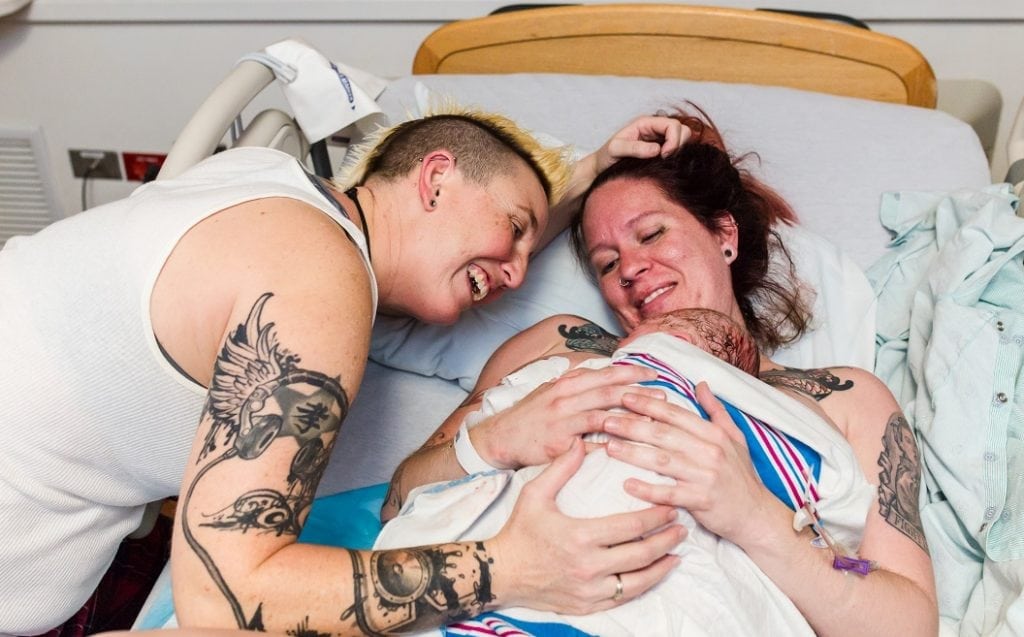
AFTER DELIVERY | Unless you or your baby have any complications, you will be left undisturbed to bond with your baby after the birth.
You will not be separated from your baby even for the newborn wellness exam.
You will have support from your midwife and birth center staff to help with breastfeeding and baby care. Staff are expert at helping you breastfeed.
Visiting policies for friends and family tend to be very liberal.
Depending on the birth center you choose, you may have the option to go home sooner than if you had chosen a hospital birth.
| If you like the idea of having a longer postpartum stay, during which you are supported and cared for by staff, you may prefer a hospital birth.
At some in-hospital midwife-led birth centers, you will need to move to another part of the hospital a few hours after your baby is born.
In that case, your sleep may be interrupted by frequent checkups.
|
COST | Birth in a midwife-led birth center is less expensive than hospital birth. | Not all health insurance covers midwife-led birth centers. You may have to pay more out of pocket for a birth center than for a hospital birth. |